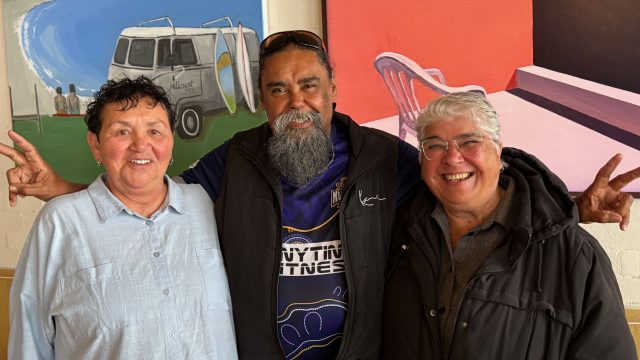
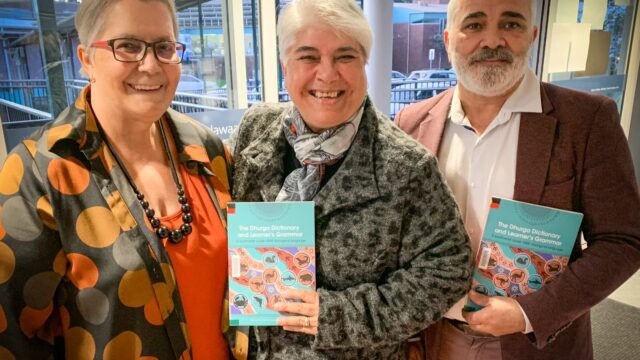
‘We have such a diverse range of people, such a diverse range of conversations, and I believe even students from universities will benefit from having a look at our website.’ – Patrica Ellis
OUR APPROACH:
The primary source of the Djiringandj words was Jutta Besold’s 2013 thesis titled “Language Recovery of the NSW South Coast Aboriginal Languages”. The thesis identified 1604 Djiringandj words, including 595 words in common with the Dhurga language.
The language collected in the thesis was recorded in the late 1800s before the creation of reserves and missions. Each word is referenced with the name of the recorder/s, the informant/s and the place of origin. It is the most concise, authentic and valid representation of the Djiringandj language to date.
Language Teachers Patricia Ellis and Kerry Boyenga found some anomalies in the Dhurga and Djiringandj languages, which required consultation with the linguist Jane Simpson of the Australian National University in Canberra who provided direction on where to find the suffixes spread throughout the thesis and how to use them.
The beautiful artwork was created by Year 1 students at Narooma Public School, strongly supported by the Principal Paul Sweeney and teachers Virginia Hodge and Sharon Pearce with direction from Lynne Thomas. The students have been learning the language for the past eight months, commencing in kindergarten and will continue learning language until Year 6. The art supplies were generously donated by Mercurius Australia.
ACKNOWLEDGEMENTS:
– Words spoken by Gary Campbell
– Pronunciation training by Patricia Ellis
– Words recorded by Judy Norris
– Words mastered by Sean Lilico
– Words and audio uploaded by Kerry Boyenga
– Artworks by students at Narooma Public School
– Artwork digitisation and upload by Isobel Knowles
BACKGROUND:
Three online dictionaries were developed throughout 2025 as part of the Yuin Digital Keeping Place Project, led by a Project Working Group of ten family representatives from Moruya to Eden, and developed in collaboration with SharingStories Foundation. The Working Group acknowledges that various spellings have been used throughout history. The spelling agreed upon by the Working Group for the purposes of the project is Dhurga, Djiringandj, and Dhawa.